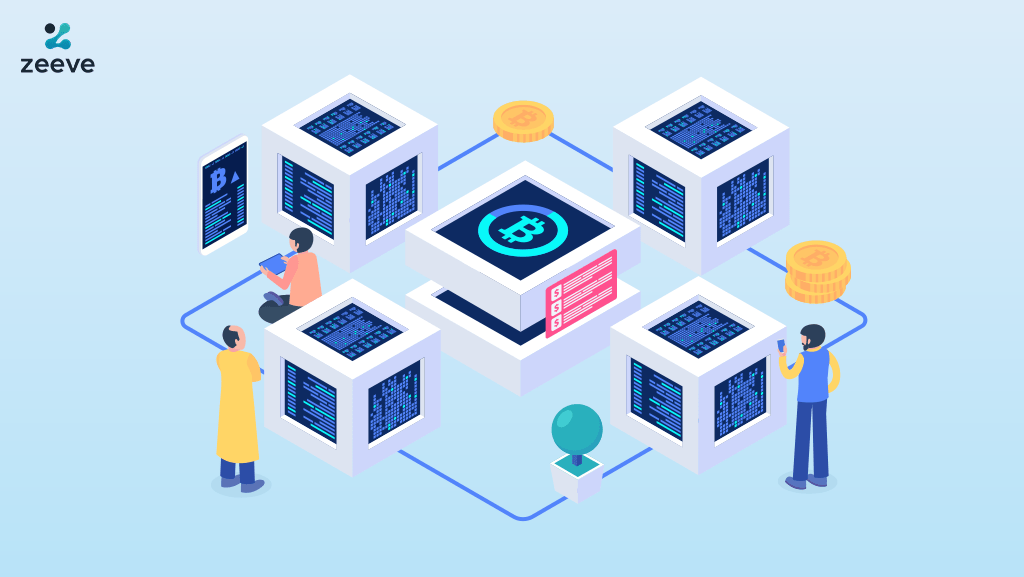
The main goal of blockchain technology is to distribute power and eliminate the need for reliance on a single central authority. It allows transactions to be conducted openly and user-friendly without requiring a central controller.
This write-up aims to provide a clear understanding of the concept of crypto nodes — their various types and their importance in a blockchain network. It emphasises how they help in ensuring a transparent and effective network.
Overview of Nodes in Cryptocurrency and Their Significance
Nodes are essential building blocks within a data structure, linking with one another to create intricate networks. They play a crucial role in the realm of cryptocurrency, executing a blockchain algorithm to validate and authorise every transaction that takes place.
The blockchain’s primary protocol and transaction history are contained in these components. With the necessary resources, people can run nodes globally due to decentralisation. Each copy of the blockchain, a digital ledger that records all transactions, is stored within the network.
The ecosystem’s nodes communicate with each other to verify and approve operations. This process ensures that everyone within the ecosystem follows the rules.
How To Set Up A Node?
Being part of a decentralised ecosystem as a node operator can benefit from earnings from mining, staking, or governance privileges.
To engage in mining or staking, you require appropriate hardware and software, a secure internet connection, sufficient storage capacity, and computational capability. For mining, a computer equipped with powerful graphics cards (ASICs) is necessary, whereas staking does not necessitate such high specifications.
Several options are available to run a full node on the BTC network, such as using RaspiBlitz software, a Lightning wallet, or Raspberry Pi computers.
Once you have selected the appropriate hardware, you can move forward with the subsequent actions:
- To obtain all the network records or a copy, synchronisation with the ledger is required, which may consume considerable time and require a large storage space. Some networks offer pruned nodes for critical data storage.
- Establish a connection and ensure proper receipt and broadcast of transactions and blocks to configure network connectivity. Nodes that have experienced prolonged disconnection may require resynchronisation.
- To assure the security of your network, it is recommended to install firewalls, maintain updated software, and use encryption. It is important to seek professional assistance to secure private keys and guarantee hardware safety.
- Keep your node up to date with the latest software releases and regularly check for network upgrades and security patches. Additionally, it is important to ensure that your hardware and software are functioning optimally.
Concluding Remarks
Cross-chain nodes make Seamless interoperability between ledgers possible, improving user interaction across different platforms.
The blockchain industry is undergoing rapid changes, which pose new challenges for crypto operators. To fully leverage the technology’s potential, they must address scalability, interoperability, and accessibility.