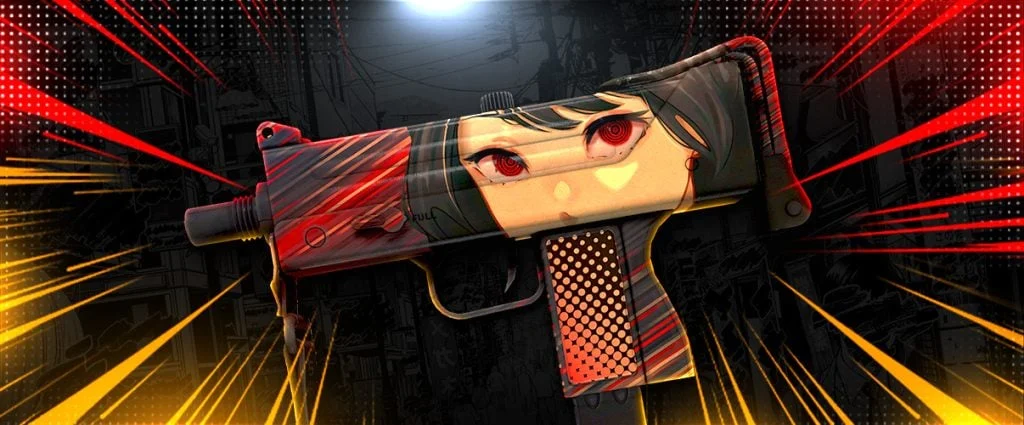
CS2 isn’t just about precise headshots and strategic clutch plays; it’s also a dynamic canvas for self-expression, where every detail, from crosshair placement to weapon aesthetics, matters to ambitious players. The game’s vibrant skin market constantly pushes creative boundaries, introducing designs that captivate and inspire a global community.
We’re currently witnessing an intriguing cultural crossover in CS2: the undeniable influence of anime aesthetics on skin designs. This trend goes beyond simple color palettes, embracing dynamic art styles, character-driven narratives, and a unique vibrant energy that’s redefining what a CS2 weapon can look like. This fusion isn’t just about making inventories pop; it’s impacting the perceived value and desirability of certain items, making understanding these trends crucial, especially if you ever decide to sell csgo skins for real money.
These anime-inspired designs offer a fresh take, moving past traditional military or abstract patterns. They infuse a level of artistic flair and cultural resonance that deeply connects with players, creating highly sought-after pieces that stand out both on the battlefield and in the marketplace.
The Unlikely Canvas: How CS2 Became a Home for Anime Art
For years, the Counter-Strike aesthetic was carved in stone. Think about it: muted color palettes, realistic weapon models, and gritty, dust-choked maps. It was a game defined by its grounded, tactical feel. The most coveted skins were often those that leaned into this realism—think sleek black finishes, military-grade camouflage, or subtle, intricate patterns. The visual language of CS was serious, tactical, and, let’s be honest, a little bit drab. It was a world of browns, grays, and the occasional splash of red from a well-placed headshot.
Then, something shifted. Suddenly, the marketplace and our in-game inventories started to see an explosion of color and character. We’re talking about vibrant pinks, electric blues, and dynamic artwork that looked like it was ripped straight from a manga panel. Weapon skins began featuring bold, stylized characters with expressive eyes and action lines that seemed to vibrate with energy. The AK-47, an icon of raw power, was now a canvas for cyberpunk heroines and futuristic mechs.
So, what gives? How did a game celebrated for its hardcore, no-frills competitive spirit become a premier gallery for an art style that is, at its core, so wildly different? This isn’t just about adding a splash of color; it’s a fundamental clash of themes. We’ve gone from tactical realism to vibrant fantasy, and the community is eating it up. The central question is no longer if these skins belong, but why they’ve become so incredibly popular and valuable.
This phenomenon is more than just a trend; it’s a reflection of a massive cultural shift within the gaming community itself. The lines between “hardcore gamer” and “anime fan” have completely dissolved. Players now demand more than just a cool pattern; they want a story, a character, and a piece of art that represents their passions outside the game. This fusion is challenging our old ideas of what a CS2 skin can—and should—be, turning every weapon into a potential statement piece.
From Milsim to Manga: A Brief History of CS Skin Evolution
To really get why the anime explosion feels both shocking and completely natural, we need to take a quick trip down memory lane. When the Arms Deal update first dropped in 2013, the concept of a “skin” was radically simple. The most legendary designs weren’t characters or elaborate murals; they were textures and patterns. Think of the iconic Case Hardened, with its random blotches of blue steel, or the smooth, mesmerizing gradient of a Fade. These skins were beautiful, yes, but they were still grounded in the idea of a weapon’s finish—a unique paint job, not a piece of art.
The real turning point came a few years later. Suddenly, we saw skins that weren’t just patterns, but fully-fledged concepts. The AWP | Asiimov, with its clean, sci-fi orange and white design, felt like it was pulled from a different universe. The legendary M4A4 | Howl introduced a creature, a personality, directly onto the weapon. These weren’t just textures anymore; they were statements. They broke the unwritten rule that a CS skin had to be at least vaguely realistic. This was the moment the floodgates of creativity began to creak open.
This shift from abstract patterns to thematic art laid all the essential groundwork for what was to come. It normalized the idea that a weapon could be a canvas for something more expressive than camouflage. As these unique designs became status symbols, their market value skyrocketed, creating a vibrant ecosystem where tracking the prices of top-tier skins on Skinomat.com became a core part of the culture. The community voted with their wallets, proving they craved artistry and narrative, not just gritty realism.
So, when the first truly anime-inspired skins started appearing, the stage was already set. The journey from the subtle blue of a Case Hardened to the bold lines of the AWP | Oni Taiji or the M4A4 | Temukau wasn’t an overnight leap. It was a gradual evolution, a slow and steady push by artists and players alike for more personality and flair. The “milsim” aesthetic had been slowly chipped away by sci-fi, fantasy, and abstract art, preparing the canvas for the vibrant and dynamic world of manga to finally make its grand entrance.
The ‘Weeb Wave’: Key Skins and Artists Defining the Trend
The AWP | Oni Taiji. This wasn’t just a colorful design; it was a full-blown narrative painting. Drawing heavily from traditional Japanese Ukiyo-e art styles, it depicts a dramatic battle between a samurai and an Oni demon. Its appeal isn’t just “anime”; it’s the raw, timeless coolness of that mythology. It proved that a weapon could tell a powerful story without a single word, resonating with players who appreciate both fierce action and classic artistry.
If the Oni Taiji was a respectful nod to the culture, the M4A4 | Temukau was a full-on embrace. This skin throws subtlety out the window, featuring a confident, blue-haired CT agent in a distinct, modern anime style. It’s vibrant, it’s bold, and it’s unapologetically for the fans. What makes it brilliant are the hidden details; upon inspection, you’ll find subtle manga-style paneling and Japanese text, rewarding players who take the time to appreciate the craft. The Temukau isn’t just a skin; it’s a declaration of fandom.
But the trend isn’t just about characters. Take the AK-47 | Leet Museo. At first glance, it’s a chaotic explosion of pop-art colors. But look closer, and you’ll see it’s a meta-commentary on the game itself, depicting Counter-Terrorists in a frenetic, comic-book style. It’s clever, self-aware, and shows the versatility of the aesthetic. These skins aren’t just imports; they are fusions, blending anime and manga influences with the core DNA of Counter-Strike to create something entirely new.
The Economic Engine: Why Anime Skins Command Premium Prices
Why does a digital rifle with a manga character on it command such a ridiculously high price? The answer is a perfect storm of classic economics and modern pop culture.
First, you have to look at the global demand. The anime and manga aesthetic isn’t a niche interest; it’s a multi-billion dollar global phenomenon with an epicenter in Asian markets, which also happen to host enormous CS2 player bases. When a skin taps into that aesthetic, it’s not just catering to a small subset of the Western audience. It’s speaking directly to millions of players who have a deep cultural appreciation for the art style. This creates a massive, competitive pool of buyers for a very limited supply of items, and you know what that does to prices.
This high demand fuels the second factor: status. These skins aren’t just cosmetic; they are loud, vibrant, and instantly recognizable. They function as Veblen goods—items where the high price is part of the appeal. Owning one is a “flex,” a clear signal to everyone in the lobby that you are a serious collector. Consider the legendary AUG | Akihabara Accept. As arguably the most famous anime skin, its rarity and iconic status drive its price tag above $275. For many, especially in the Asian market where its theme resonates deeply, owning it is less about the weapon and more about displaying a coveted piece of CS2 history.
Finally, it all ties into the psychology of collecting. An inventory full of muted, realistic skins is cool, but an M4A4 | Temukau or an AWP | Oni Taiji is a centerpiece. It’s the grail piece that the rest of the collection is built around. Because they are so visually distinct from everything else, they become focal points of desire. They’re not just another pattern; they’re a statement of identity, and in the world of digital collectibles, identity is a commodity people are more than willing to pay a premium for.
Case Study: The M4A4 | Temukau Phenomenon
To truly understand the principles we’ve talked about in action, we need to look no further than the M4A4 | Temukau. This skin wasn’t born in a Valve design meeting; it began its life as a submission on the Steam Workshop, a piece of art created by the community, for the community. Its selection for the Revolution Case was a massive signal that Valve was not only listening but was ready to fully endorse this aesthetic at the highest tier.
When the case dropped, the reaction was immediate and explosive. The Temukau wasn’t just another Covert skin; it was the headliner. The market went into a frenzy, confirming the massive pent-up demand for high-quality, modern anime art. Why did it hit so hard? The genius is in its fusion. The character isn’t just a generic anime girl; she’s explicitly a Counter-Terrorist agent, complete with tactical gear. This masterstroke bridges the gap between the game’s tactical identity and the expressive art style.
The journey from a fan’s concept to one of the most desirable M4A4s in the game is the perfect case study. It proves that the anime trend isn’t a corporate push but a grassroots movement from within the player base, one that has now proven itself to be an economic powerhouse.
Beyond the Official Cases: The Anime Boom in the Steam Workshop
So, where do these incredible designs actually come from? While Valve is the ultimate gatekeeper, the creative engine room is, without a doubt, the Steam Workshop. Think of it as the ultimate open mic night for digital artists, a sprawling, chaotic, and brilliant space where anyone with talent can showcase their vision for the next legendary skin.
This isn’t just a digital art gallery; it’s a living, breathing focus group. Every upvote, every positive comment, and every share on social media is a signal sent directly to Valve. For years, community artists have been flooding the Workshop with bold, anime-inspired designs, testing the waters and proving that an audience for this aesthetic not only existed but was starving for more. This is where the real experimentation happens, far from the constraints of a corporate design brief.
This creates a powerful feedback loop that has come to define the modern skin market. The overwhelming popularity of anime-themed submissions on the Workshop directly influences what Valve selects for its official cases. We saw this play out perfectly with the M4A4 | Temukau. Before it was a high-tier item in the Revolution Case, it was a community darling, a concept that lit up platforms like Reddit and proved its market viability long before Valve gave it the green light.
Essentially, the community acts as the A&R department for CS2’s aesthetic. By championing these designs, players are not just consumers; they are curators, collectively telling Valve what they want to see next. This grassroots dynamic ensures that the “Weeb Wave” isn’t a fleeting trend—it’s a direct reflection of the community’s evolving identity, built from the ground up.
Culture Clash or New Identity? The Community’s Divided Reaction
Of course, not everyone has rolled out the red carpet for the “Weeb Wave.” For every player equipping an M4A4 | Temukau, there’s another lamenting the loss of the game’s original gritty, grounded identity. This aesthetic shift has drawn a clear battle line in the sand, igniting a passionate debate about the very soul of Counter-Strike. You don’t have to scroll far on Reddit or Twitter to see the two camps clashing.
On one side, you have the purists. These are often the veterans, the players who fell in love with CS for its no-nonsense, realistic military feel. To them, a brightly colored anime girl on the side of a rifle isn’t just a skin; it’s a betrayal. They see it as the “Fortnite-ification” of their beloved tactical shooter, a slide from serious competition into flashy, distracting cosmetics that undermine the game’s core tone. For this group, the ideal skin is something like a Fade or a Case Hardened—beautiful, but still rooted in the weapon’s form.
On the other side are the new-school players who embrace this expressive freedom. They argue that a game’s identity can evolve and that skins are the ultimate form of self-expression. Why shouldn’t they be able to use art they connect with? To them, the purists are just gatekeepers, resistant to change. This debate reached a fever pitch in 2025, when a market correction made many of these once-exclusive anime skins more affordable. Suddenly, they were everywhere, and the culture clash went from a niche forum argument to an in-your-face reality every match.
So, what does this all mean for the future? Is this a sign of a community losing its identity, or simply forging a new, more diverse one? The answer, it seems, is still being written with every case opened.
The Future of CS2 Cosmetics: Is the Anime Aesthetic Here to Stay?
So, after all the heated debates and market frenzies, what’s the final verdict? Is the “Weeb Wave” a temporary fad destined to wash away, or has it permanently redrawn the map of CS2’s aesthetic? All signs point to the latter. This isn’t just a trend; it’s an established pillar of the game’s cosmetic ecosystem, standing right alongside the classic military patterns and abstract designs.
The success of the anime aesthetic has essentially kicked the door open for other genres. If a vibrant, manga-style CT agent can become one of the most desirable rifle skins in the game, what’s stopping other pop culture crossovers? It’s not hard to imagine a future where we see skins inspired by gritty cyberpunk, high fantasy, or even retro cartoons. The community has proven there’s a massive appetite for designs that go beyond the game’s original tactical scope, and Valve has shown it’s willing to listen when the demand is loud enough.
Think of it this way: the anime boom wasn’t really about anime itself. It was about permission. It gave players and artists permission to treat the game’s arsenal not just as weapons, but as canvases for personal expression. This shift transforms CS2 from being merely a top-tier tactical shooter into something more: a cultural platform. It’s a space where your in-game identity can reflect your out-of-game passions.
Whether you’re a purist who winces at every anime skin or a collector who can’t get enough, one thing is clear: the genie is out of the bottle. Counter-Strike’s identity is no longer monolithic. It’s a living, breathing thing being shaped in real-time by its incredibly diverse community. And honestly? That makes its future more exciting than ever.
Sources
[1] Source: https://blix.gg/news/cs-2/best-anime-cs2-skins-stickers-for-2025-must-have-designs/
- The AUG | Akihabara Accept is considered the most famous anime skin in CS2, with prices exceeding $275 due to its rarity and high demand among anime fans, especially in Asian markets, making it a symbol of status and reinforcing premium pricing versus standard skins.
- A feedback dynamic exists between community-created anime skins on the Steam Workshop and Valve’s official case selections, with the popularity of anime-themed Workshop entries directly influencing which aesthetic styles are chosen for official releases—demonstrated by the public discussion and adoption of skins like the M4A4 | Temukau originally popularized on Reddit and other community platforms.
[2] Source: https://hypebeast.com/2025/10/counter-strike-2-cosmetic-market-crash-knife-update-info The rise of anime skins has ignited a visible split in the community, with social media and forums regularly featuring debates between purists who favor CS’s grounded, realistic military look and newer players embracing the colorful, expressive anime designs—especially after price drops made these skins more accessible in 2025, intensifying community debate about the soul of the game.