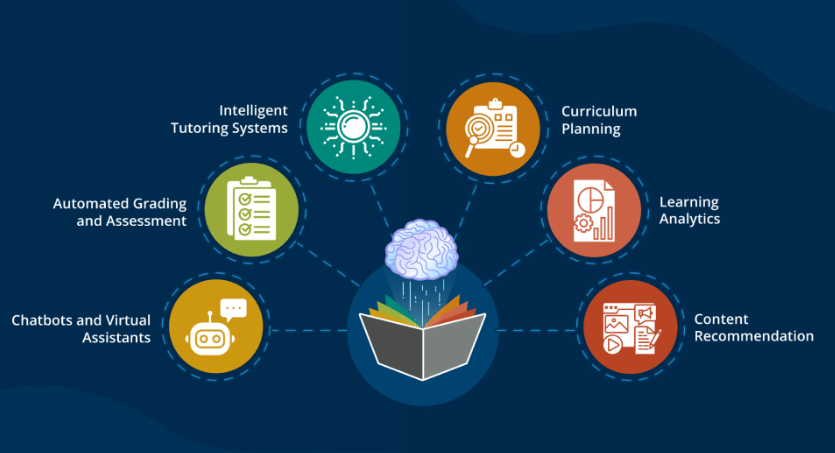
Generative AI is rapidly changing how we create, design, and interact with information. From generating text and images to writing code and producing personalized recommendations, it has become one of the most influential areas of artificial intelligence. For professionals who want to understand this technology and its impact, there are two distinct but complementary learning options available — the generative ai certification program from Johns Hopkins and the gen ai business applications course from UT Austin McCombs. Together, they cover both the technical foundations and the business strategy behind this fast-evolving field.
Understanding Generative AI Through Certification
A certification program in generative AI typically focuses on the technical side — how these systems work, what models they use, and how to build or fine-tune them for different use cases. The Johns Hopkins program explores large language models, diffusion models for image generation, and reinforcement learning from human feedback (RLHF). Learners gain hands-on experience with prompt engineering, fine-tuning open-source models, and evaluating model performance. The curriculum often includes modules on data preparation, ethics, and safety, ensuring that learners understand not just how to build models but how to use them responsibly.
This type of certification is ideal for technical professionals, data scientists, or software engineers who want to work directly with generative models. By completing projects and exercises, participants learn to create prototypes, experiment with various model architectures, and assess trade-offs between accuracy, cost, and scalability. The result is a deeper understanding of what is possible with generative AI, along with the confidence to build solutions that meet specific requirements.
Exploring Business Applications of Gen AI
While the technical side is essential, many professionals need to focus on strategy — deciding where generative AI can add value and how to deploy it effectively. The gen ai business applications course is designed to help decision-makers, managers, and business leaders understand use cases and implementation pathways. It covers practical applications like automated content creation, customer support chatbots, knowledge management systems, and personalization engines. Participants learn frameworks for evaluating opportunities, estimating ROI, and setting up governance to avoid risks such as data leakage or bias.
This type of program is valuable for product managers, operations leaders, and executives who need to integrate AI into workflows without getting lost in the technical complexity. Rather than teaching coding, it focuses on aligning AI initiatives with business objectives, managing change, and building cross-functional teams that can deliver results.
The Value of Combining Technical and Strategic Perspectives
Studying both a generative AI certification and a business applications course provides a well-rounded view of the field. Technical knowledge helps professionals understand what is feasible, what data and infrastructure are required, and how to evaluate vendor claims. Strategic knowledge helps them decide where to apply resources, how to measure success, and how to manage risk. Together, these perspectives enable organizations to avoid common pitfalls such as experimenting with AI in isolation or scaling projects without proper governance.
Real-World Use Cases Across Industries
Generative AI is already being used across multiple industries. In healthcare, it assists in drug discovery and clinical documentation. In marketing, it powers content generation for campaigns and personalized product recommendations. Financial services firms use it for report automation, while software companies leverage it for code suggestions and test case generation. Understanding how these systems work and how they can be applied responsibly allows professionals to stay competitive in a rapidly changing landscape.
Learning Experience and Outcomes
Both programs are delivered online, allowing learners to balance their studies with work. Certification programs often include coding assignments, capstone projects, and peer collaboration, which build practical skills. Business-focused programs typically include case studies, group discussions, and strategy templates that participants can take back to their organizations. This blended approach ensures that learning is not just theoretical but actionable.
Who Can Benefit
Technical professionals gain the ability to build, test, and deploy generative AI models. Business professionals gain the ability to identify opportunities, manage projects, and lead AI initiatives. Even non-technical roles like HR, marketing, and customer success can benefit from understanding generative AI, as it is increasingly integrated into everyday workflows.
Conclusion
Generative AI is more than a passing trend — it is a powerful tool that will continue to shape industries and workflows. A combination of technical training through a generative AI certification and strategic training through a business applications course can help professionals stay ahead. Whether you want to build models or lead teams that implement them, these learning paths provide the knowledge and confidence to turn AI potential into real-world results.