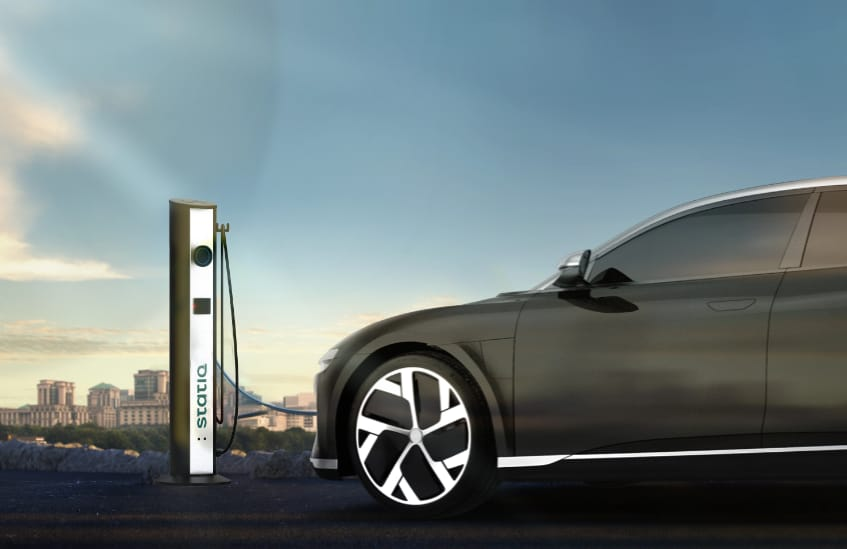
Recently, there has been an increase in EV (Electric Vehicles) popularity and the need for an affordable and fast Electric Vehicle Charging Solution. Electric Vehicle owners, as per their needs, can determine whether to charge with AC electric chargers or DC Electric Chargers. For this, they need to understand the difference between the two. In this blog, we will delve into understanding AC and DC electric vehicle chargers to help us make informed decisions when choosing an electric charger for our needs.
What is AC Charging?
An AC charger, also known as a Level 1 or Level 2 EV Charger, uses alternating current (AC) to power electric vehicles.
Level 1 charger, which offers a charging rate of three to five miles per hour, can use a typical home plug for charging your EV. Comparatively, level 2 charging that charges a device up to 10–20 miles per hour on average needs a stronger electrical outlet.
What is DC Charging?
A DC electric vehicle charger, also known as Level 3 or fast charging, is a type of charger that uses direct current (DC) to power electric vehicles.
Rectifiers are used by DC chargers to transform grid electricity into the direct current needed to charge an electric vehicle’s battery. With a charging rate of 60–100 miles per hour, this method of charging is usually quicker than AC charging.
Difference between AC and DC Electric Vehicle Chargers
Charge Speed
AC Chargers take longer to charge an EV, making it ideal for overnight home charging or top-ups at leisure and hospitality settings, offices, and other workplaces.
DC Chargers are used to fast charge an EV, making it ideal for fast public charging while on the highway or planning a long route trip in an EV.
Cost
AC chargers charge an EV by converting alternative current to direct current, using a converter inside the car. Whereas DC chargers directly supply current to the EV battery, eliminating the need for the converter inside the electric car. With these complex electrical systems and specialized equipment, it is costly to install a DC Charger compared to an AC charger.
Compatibility
Not all EVs (Electric Vehicles) are created equal. Most EVs can be charged with AC level 2 chargers than DC fast chargers. To know your vehicle’s compatibility, you can check the owner’s manual or contact the manufacturer of your car.
In the Statiq App, you can easily find the type of charger available and according to your need and the vehicle’s compatibility, you can plan and book your charging session.
Conclusion
To sum up, charging with DC and AC are complementary. Daily charging needs are easily satisfied by AC, whereas long trips can be made stress-free with minimal downtime because of DC. As an EV owner, you can plan their charging session as per their need and can maximize both possibilities and improve their driving experience.